
IMOU Cameras
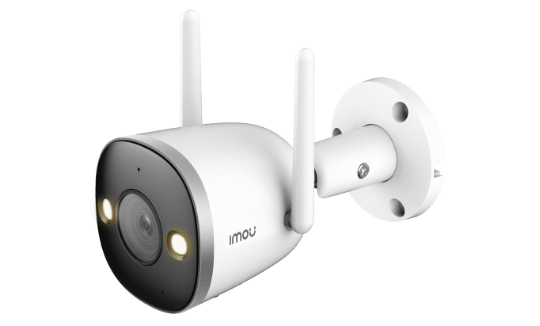
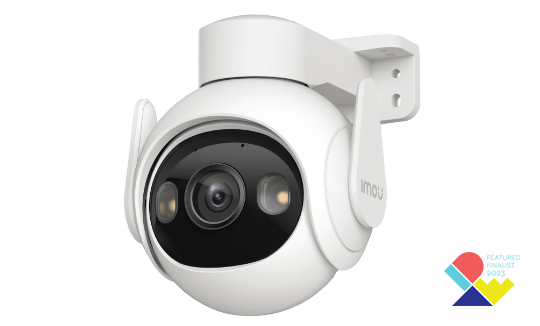
IMOU OUTDOOR CAMERA
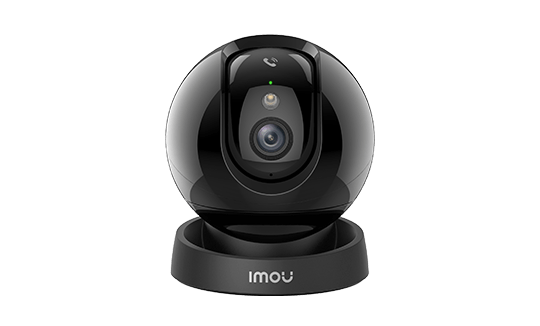
IMOU INDOOR CAMERA
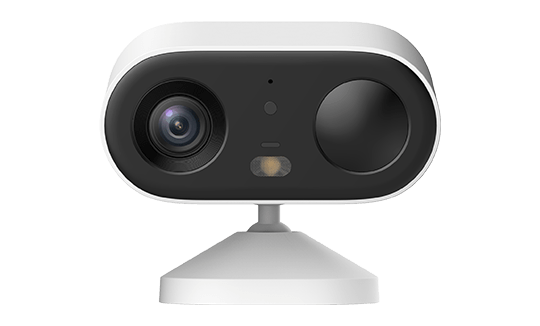
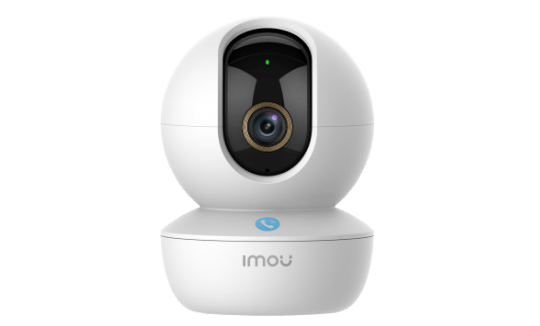
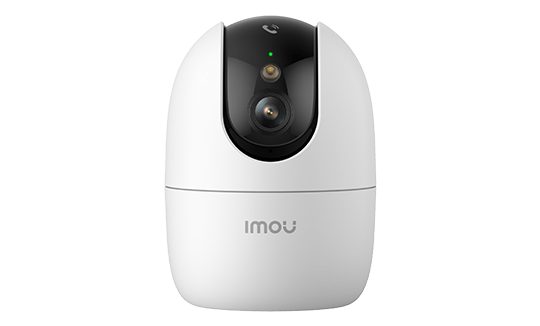
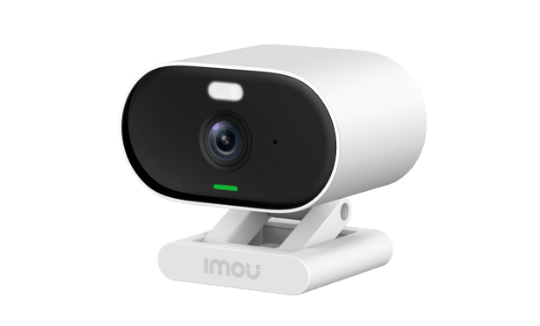
Imou Wire-Free Cameras: Install Anywhere, Monitor Everything
Battery-powered cameras solve a straightforward problem: you want to monitor a location where there is no mains socket and no Ethernet cable nearby. A garage canopy, a gate, a shed, a workshop, a temporary building site, a holiday home — all of these situations call for a camera you can mount in ten minutes with a drill and two screws, with no trenching and no electrician required.
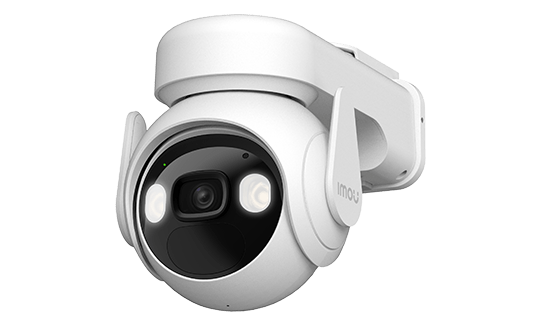
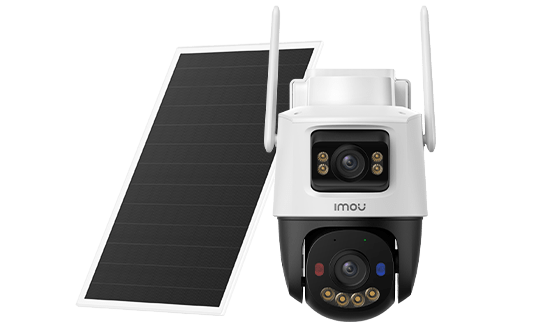
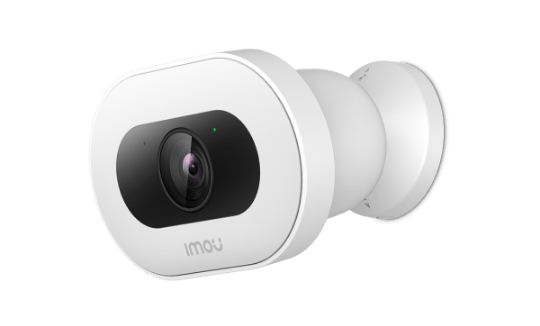
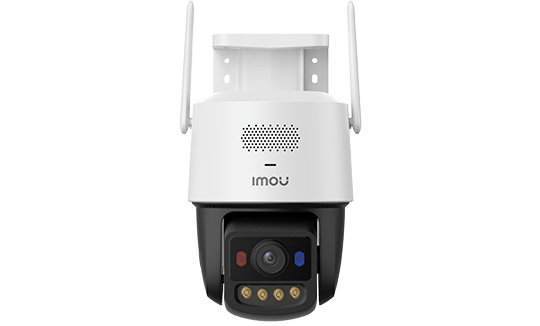
The Imou wire-free range is organised into two main series. The Cell series covers typical domestic scenarios: smaller and larger homes, gardens and versatile indoor use. The AOV series goes further, with a larger battery, an integrated or optional solar panel, and 4G connectivity for areas without Wi-Fi — farmland, agricultural properties and isolated industrial sites. Two additional models — the Knight and the Versa — round out the range.
Strengths and Limitations of Battery-Powered Cameras
Before settling on a model, it helps to have a clear picture of what battery cameras do well and where they fall short.
What They Do Well
- No cabling constraints — mount them anywhere you can fix a bracket
- Easy to reposition as your needs change
- Battery life of several weeks to several months with solar assistance
- Fully off-grid operation, useful where there is no electrical supply
What They Cannot Do
- Continuous 24/7 recording: battery cameras record on motion detection, not continuously. Running in continuous mode would drain the battery within hours.
- The same level of constant image quality as wired cameras: some models enter a sleep state between detections, which can introduce a slight delay at wake-up.
- Absolute reliability without recharging: even with a solar panel, a prolonged spell of overcast weather can deplete the battery entirely.
These limitations are well understood and acceptable for the vast majority of use cases. If you need continuous recording or business-critical 24/7 monitoring, a wired camera remains the preferred solution.
The Cell Series: The Wire-Free Reference for the Home
Eight models make up the Cell series. They share an emphasis on ease of use: batteries charge via USB or a dedicated charging dock, connectivity is Wi-Fi only, and models are available for both indoor and outdoor use. The quoted battery lives — up to 120 days — are based on typical use with moderate motion triggering. Your actual result will depend on how many events are detected each day.
Cell Go — The Entry Point to Wire-Free
The Cell Go is the simplest battery camera in the Imou range: 3 MP, 15-metre infrared range, quoted 120-day battery life, IP65 rating. Its compact form and price of €50–70 make it the natural first step into wire-free surveillance, or a secondary position in a garden or courtyard. No pan/tilt, no solar — just the essentials.
Cell 3 — The Versatile 5,000 mAh Option
The Cell 3 adds a 5,000 mAh battery to the Cell Go, a slightly wider field of view (98° horizontal) and an IP66 rating (one level above the Cell Go’s IP65). Battery life remains at the quoted 120 days. At €55–75, it is more robust than the Cell Go and better suited to a permanent outdoor installation exposed to the elements.
Cell 3C — The Cell 3 with Solar Panel
The Cell 3C takes the Cell 3’s specifications and adds a 2.2 W solar panel. This panel is not large enough to run the camera continuously in overcast conditions, but it recharges the battery sufficiently to deliver near-unlimited runtime in normal sunlight. At €70–90, this is a compelling option for a sunny outdoor location where you do not want to regularly remove the camera for recharging.
Cell 3C All-in-One — 3K with Integrated Solar
The Cell 3C All-in-One raises the resolution to 5 MP / 3K QHD while retaining the battery and solar panel of the Cell 3C. This is the higher-resolution version of the solar Cell range. At €85–110, it is worth considering if you need to pick out details at a distance — number plates, faces — from an outdoor position without mains access.
Cell 2 — Full-Colour Night Vision
The Cell 2 distinguishes itself with a Full Night Vision feature: colour night vision without active white lighting, achieved through an optimised sensor and image processing pipeline. With 4 MP resolution and a 6,000 mAh battery, it suits positions with frequent night-time activity — a garage door or a gate — where identifying the colour of vehicles or clothing can be useful. Price: €60–80.
Cell PT — Pan/Tilt with Built-In Siren
The Cell PT introduces motorised movement to the Cell series: pan/tilt rotation, 20-metre infrared range, a built-in siren for active deterrence and a rechargeable battery. At €70–90, it is the only Cell series battery camera that can follow motion and raise an active alarm. Useful for covering a wide area from a fixed mounting point without running any cables.
Cell PT 2C — The Most Complete Battery PTZ
The Cell PT 2C is the most capable model in the Cell series. It combines 350° pan and 90° tilt, a 5,000 mAh battery, an optional 3 W solar panel, a 110 dB siren, a spotlight and multiple IR modes to suit different conditions. The f/1.6 aperture improves low-light sensitivity. At €90–120, this is the right choice if you want a battery camera that can actively respond to an intrusion and cover a wide perimeter without a fixed power supply.
Cell PT Lite — Affordable 2K Pan/Tilt
The Cell PT Lite is the accessible version of the battery PTZ: 2K QHD resolution, pan/tilt rotation, without the siren or solar panel of the Cell PT 2C. At €65–85, it suits users who want the flexibility of a motorised camera on battery without the active deterrence features.
The AOV Series: Battery, Solar and 4G for Remote Locations
The AOV (Always-On Vision) series is built for installations where neither Wi-Fi nor mains power is available. All AOV models include 4G connectivity and a high-capacity battery. Some add an integrated solar panel. This is the range for farmland, construction sites, remote holiday properties and any isolated industrial site.
An important note: AOV models require a SIM card with a data plan for their 4G connection. This recurring cost should be factored into your budget.
AOV PT 5MP — The Versatile 4G PTZ
The AOV PT 5MP is the base model of the series: 5 MP, 340° pan and 90° tilt, 76° horizontal FOV, 20-metre infrared range, 10,000 mAh battery, Wi-Fi and 4G. At €100–140, it is the entry-level solution for off-grid PTZ surveillance. The 10,000 mAh battery offers significantly longer runtime than the Cell series’ 5,000 mAh units.
AOV PT Lite — Compact and Affordable 4G
The AOV PT Lite is the slimmed-down version of the AOV range: pan/tilt, battery, solar, Wi-Fi and 4G at a lower price (€90–120). It represents the entry point to the AOV family for budget-conscious buyers who need 4G connectivity.
AOV PT Pro — The Most Complete with Active Deterrence
The AOV PT Pro is the reference model in the series: 5 MP, 340° pan and 90° tilt, 76° horizontal FOV, 25-metre infrared range, 10,000 mAh battery, 5 W solar panel, siren, floodlights, PIR and AI detection, IP66. At €130–160, this is probably the best choice if you want an autonomous 4G battery camera with active deterrence capability. The combination of PIR (heat detection) and AI further reduces false alerts in natural environments where wildlife and vegetation movement are common triggers.
AOV PT 4K — Maximum Resolution with 4G
The AOV PT 4K raises the resolution to 4K on a PTZ body with battery, solar, Wi-Fi and 4G. At €130–160, it sits at the same price point as the AOV PT Pro but prioritises image quality over active deterrence. This is the right choice if you need to identify individuals or vehicles at long range on a site without a fixed network.
AOV Dual — Dual-Lens and 10,000 mAh Battery
The AOV Dual is the most ambitious model in the series: dual 5 MP + 5 MP sensors for 10 MP total, 76° horizontal FOV, 25-metre infrared range, 10,000 mAh battery, 8 W solar panel (the most powerful in the AOV range), Wi-Fi and 4G. At €150–200, it is a camera for professional or semi-professional installations in remote areas. The 8 W solar panel provides considerably better resilience during extended cloudy spells than the 5 W models.
Knight and Versa: Two Complementary Models
Knight — High-Quality 4K Battery Camera
The Knight delivers 4K resolution on battery, without the AOV series options (no 4G, no integrated solar). At €100–130, it positions itself as the premium battery camera for domestic use — a main or secondary property where Wi-Fi is available. Its 4K resolution sets it apart from the Cell range, none of which exceed 3K.
Versa — The Compact Multi-Purpose Battery Camera
The Versa is the most compact and affordable model in the Imou wire-free range. With 2 MP resolution, a 97° horizontal FOV, 20-metre infrared range and a 120 dB siren, it can run on battery or on DC 5V power via a USB-C or micro-USB cable. Its IP65 rating makes it usable in sheltered outdoor positions. At €45–65, it is the most economical option for a simple location — a letterbox area, a stairwell or a garden shed — where 4K resolution is not required.
The Versa’s 120 dB siren is the loudest in the entire Imou wire-free range, which makes it a surprisingly effective active deterrent for its price.
Full Comparison Table — Imou Wire-Free Cameras
| Model | Resolution | Pan/Tilt | Battery | Solar | 4G | IP Rating | Siren | Typical Life | Price |
|---|---|---|---|---|---|---|---|---|---|
| Versa | 2 MP | No | Or DC 5V | No | No | IP65 | 120 dB | — | €45–65 |
| Cell Go | 3 MP | No | Yes | No | No | IP65 | No | 120 days | €50–70 |
| Cell 3 | 3 MP | No | 5000 mAh | No | No | IP66 | No | 120 days | €55–75 |
| Cell PT Lite | 2K QHD | Yes | Yes | No | No | — | No | — | €65–85 |
| Cell 3C | 3 MP | No | 5000 mAh | 2.2 W | No | IP66 | No | Near-unlimited (sun) | €70–90 |
| Cell PT | 3 MP | Yes | Yes | No | No | IP66 | Yes | — | €70–90 |
| Cell 2 | 4 MP | No | 6000 mAh | No | No | — | No | — | €60–80 |
| Cell 3C All-in-One | 5 MP/3K | No | Yes | Yes | No | IP66 | No | — | €85–110 |
| Cell PT 2C | 3–5 MP | 350°/90° | 5000 mAh | 3W opt. | No | IP66 | 110 dB | — | €90–120 |
| Knight | 4K | No | Yes | No | No | — | No | — | €100–130 |
| AOV PT Lite | 5 MP | Yes | Yes | Yes | Yes | — | No | — | €90–120 |
| AOV PT 5MP | 5 MP | 340°/90° | 10000 mAh | No | Yes | — | No | — | €100–140 |
| AOV PT 4K | 4K | Yes | Yes | Yes | Yes | — | No | — | €130–160 |
| AOV PT Pro | 5 MP | 340°/90° | 10000 mAh | 5 W | Yes | IP66 | Yes | — | €130–160 |
| AOV Dual | 10 MP (5+5) | No | 10000 mAh | 8 W | Yes | — | No | — | €150–200 |
How to Maximise Battery Life
Battery life depends directly on how often the camera is triggered. Every detection wakes the camera, records a clip, sends a notification and transmits over Wi-Fi — all of which consume power.
Refine the Detection Zone
Use the Imou Life app to limit the active detection area and exclude zones with constant background movement — a road behind the scene, a tree at the edge of frame or a neighbour who walks past regularly. A well-tuned detection zone can reduce triggers by 50–70%.
Adjust Sensitivity
On most Cell and AOV models, you can set motion detection sensitivity on a scale of 1 to 5. Setting it too high generates alerts from minor lighting changes. Start at 3 and fine-tune based on results.
Enable AI Detection
If your model includes AI person/pet detection, switch it on. It filters out false triggers from animals and passing vehicles, reducing the number of recorded clips without reducing real surveillance coverage.
Reduce Resolution and Clip Length
A 3K video consumes more power to process and transmit than a 1080p video. If maximum resolution is not essential, stepping down one level can noticeably extend battery life. Reducing clip length from 30 seconds to 10 seconds also cuts consumption per event.
Position the Solar Panel Correctly
For solar-equipped models (Cell 3C, AOV), the panel’s orientation and angle are critical. In the UK and northern Europe, a south-facing orientation with a 30–45° tilt is optimal. A poorly oriented panel can produce two to three times less energy than a correctly positioned one.
Frequently Asked Questions — Imou Wire-Free Cameras
Can AOV cameras be used on Wi-Fi only without a SIM card?
Yes. 4G is an additional option, not a requirement. If your installation has Wi-Fi coverage, you can use an AOV camera on Wi-Fi alone and only insert a SIM card as a failover in case your broadband goes down.
Can Cell cameras be used indoors?
Yes. Cell cameras with no IP rating or IP65 are suitable for indoor use. IP66-rated models are designed for outdoor use but work perfectly indoors. Their advantage indoors is the absence of a power cable, which is helpful in rooms where there is no socket near the ideal mounting position.
Can these cameras record to an SD card?
Most Cell and AOV models include a microSD slot for local recording. The maximum supported capacity varies by model (typically 128 or 256 GB). Check the datasheet for the specific model. Imou Care cloud recording is available as an optional extra.
What is the difference between PIR and video motion detection?
PIR (Passive Infrared) detection senses body heat — it only triggers when a heat source (person or animal) enters the zone. Video detection analyses differences between successive frames. PIR generates fewer false alerts from lighting changes, but may miss people in unusual thermal conditions. AOV PT Pro models combine both methods for greater reliability.
Is a 2.2 W solar panel really enough?
In good sunlight conditions (4–5 hours of direct sun per day), a 2.2 W panel comfortably compensates for a camera’s daily consumption in detection-only mode. In winter or in less sunny regions, the battery will gradually discharge. A 5 W panel (AOV PT Pro) or 8 W panel (AOV Dual) provides much greater resilience against seasonal variation.
Key Takeaways
- Imou battery cameras (Cell and AOV series) install in under 10 minutes without cable — perfect for gates, sheds and holiday homes.
- Battery life reaches 120 days on AOV models with moderate event detection — well above most competitors in this category.
- Cell 3C and Cell PT 2C include a built-in solar panel for near-unlimited battery life with 4+ hours of daily direct sunlight.
- IP66 certification ensures resistance to rain and weather for all outdoor installations across European climates.
- In event-only recording mode, a 64 GB SD card stores more than 3 weeks of events at 3 MP resolution.
Frequently Asked Questions
How long does it take to recharge an Imou Cell camera battery?
With the included USB-C cable and a 5V/2A charger, a full recharge takes between 4 and 6 hours depending on battery capacity (5,200–10,000 mAh). With an Imou 6 W solar panel in sunny weather, recharging from 20% takes approximately 8 hours. Cell 3C AiO and Cell PT 2C models maintain charge continuously with their integrated panel.
Do battery cameras record continuously?
No, not in battery mode. To preserve battery life, Imou battery cameras record in event mode — waking only on motion or person detection. Continuous 24/7 recording would drain the battery in hours. If continuous recording is a priority, choose a wired Wi-Fi or PoE camera connected to a NVR.
What is the Wi-Fi range for a battery Imou camera mounted outdoors?
In open outdoor conditions with direct line of sight to the router, up to 50 m. In practice, with walls and obstacles, expect 15–25 m effective range for a stable connection. If the camera is too far from the router, install an indoor/outdoor Wi-Fi extender at an intermediate position, or consider the Cell PT 4G or Knight models for truly remote sites.
Do Imou battery cameras trigger on false alerts?
Built-in AI detection (people, vehicles, animals) significantly reduces false alerts. Also configure custom detection zones in Imou Life to ignore high-movement areas outside your property (public road, boundary vegetation). With these settings, false alerts are reduced to less than 5% of notifications.