
IMOU Cameras
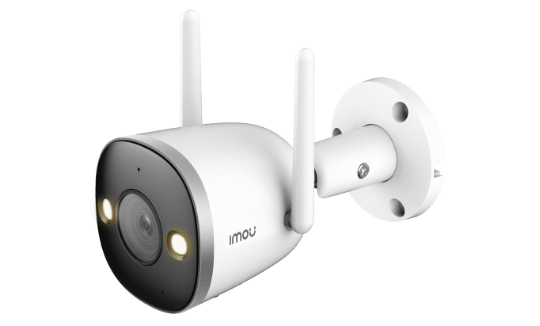
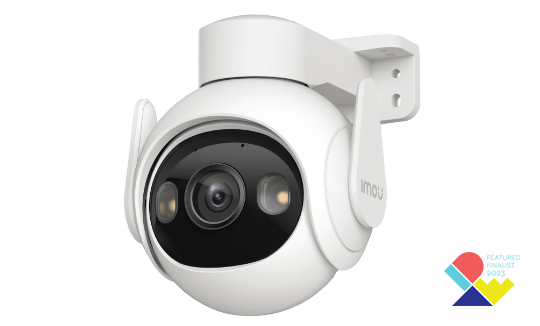
IMOU OUTDOOR CAMERA
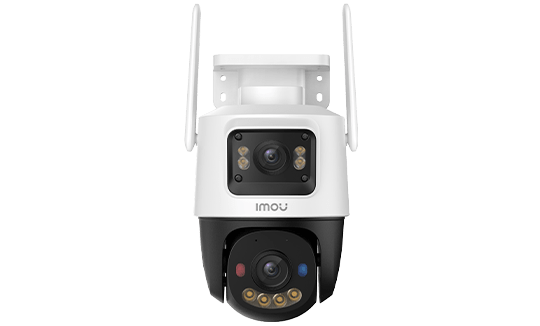
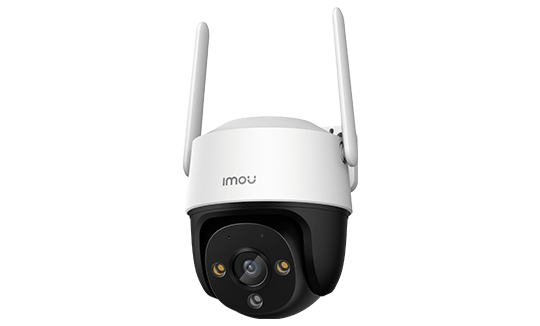
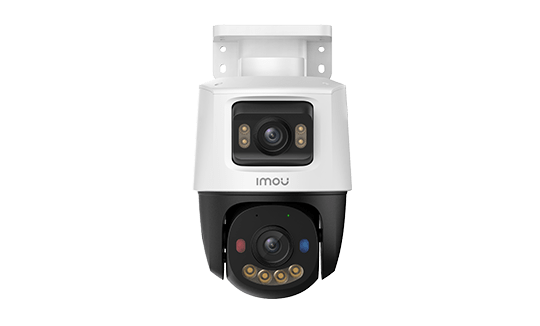
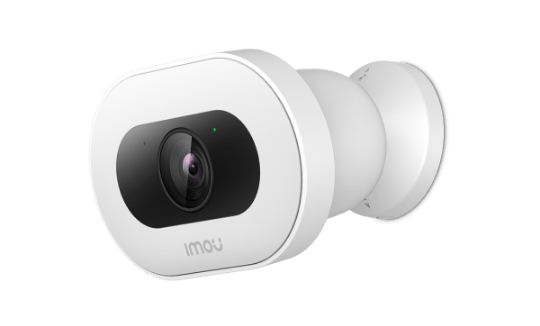
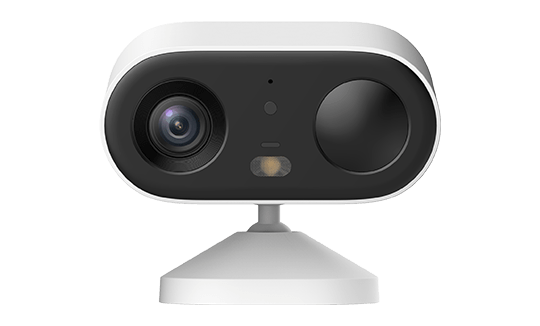
IMOU INDOOR CAMERA
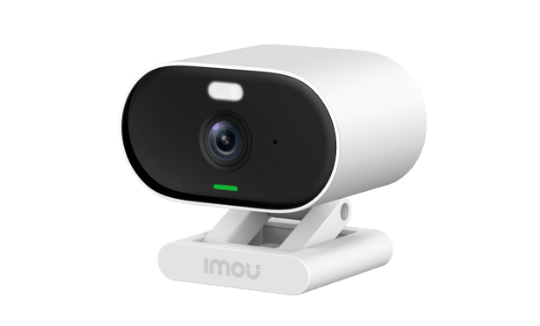
Imou PoE Cameras: Wired Surveillance Without Compromise
Power over Ethernet (PoE) remains the benchmark for serious CCTV installations.
A single RJ45 cable powers the camera and carries the digital video stream back to the recorder or switch — no Wi-Fi fluctuation, no network dropout from interference, and no mains socket required at each camera position.
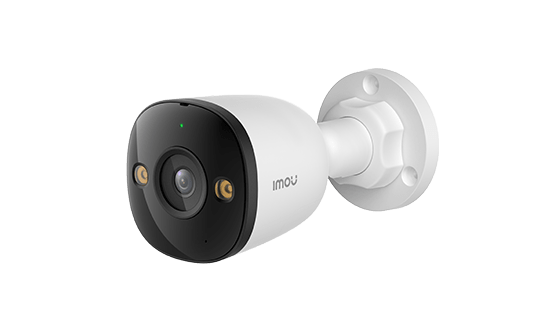
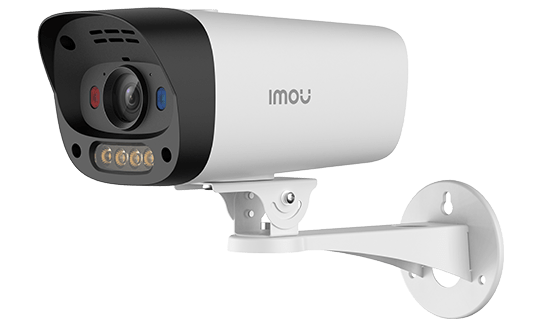
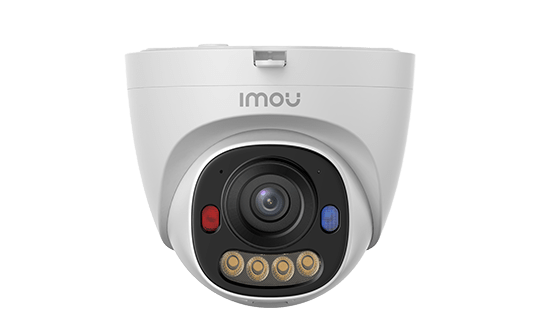
Imou’s PS series groups dome and bullet cameras designed for this type of installation. Models range from 4 MP to 10 MP in a dual-lens configuration, all encoding in H.265, which cuts storage consumption by approximately 50% compared with H.264. The N110 and N118 NVRs centralise up to 10 or 18 PoE streams on a single recorder.
This system suits retail shops, logistics warehouses, managed residential blocks, car parks, farms and large homes with existing or newly installed network cabling.
Imou PS Series PoE Cameras
The PS series covers a broad spectrum of requirements: 4 MP to 10 MP resolution, infrared range from 30 to 60 metres, fixed 2.8 mm lenses. All PS cameras are IP67-rated (dust-proof and temporarily submersion-resistant) and use H.265 compression.
PS3E — 4K / 8 MP, No Microphone
The PS3E is the entry-level 4K camera in the series. Its 8 MP sensor produces an image at 3,840 × 2,160 pixels, sufficient to read a number plate at 10–12 metres in daylight. The 2.8 mm lens gives a wide angle of view, well suited to corridors, entrance halls and building facades.
It is powered by standard PoE 802.3af (up to 15.4 W) and does not include a built-in microphone. This is a deliberate design choice: in some commercial or residential-block installations, audio recording is subject to legal restrictions. The PS3E avoids that issue by design.
- Resolution: 8 MP (4K, 3840×2160)
- Lens: 2.8 mm, wide angle
- IR range: 30 metres
- Compression: H.265
- PoE standard: 802.3af
- Microphone: none
- IP rating: IP67
PS1C — 4 MP Versatile Camera
The PS1C is the entry-level camera in the PS series at 4 MP (2,560 × 1,440). It suits tighter budgets or installations with a high number of camera positions.
A 4 MP sensor still delivers twice the pixel density of conventional 1080p footage.
It operates on standard 802.3af PoE. The 30-metre infrared range is well matched to indoor spaces and smaller outdoor entrances.
- Resolution: 4 MP (2560×1440)
- Lens: 2.8 mm
- IR range: 30 metres
- Compression: H.265
- PoE standard: 802.3af
- IP rating: IP67
PS50 — 5 MP with Built-In Microphone
The PS50 steps up with a 5 MP sensor (2,880 × 1,620) and includes a microphone. Local audio recording is therefore possible, capturing verbal exchanges at a shop entrance or reception area. It requires PoE 802.3at (PoE+, up to 30 W).
The 50-metre infrared range makes it suitable for long corridors, internal courtyards and medium-sized covered car parks.
- Resolution: 5 MP (2880×1620)
- Lens: 2.8 mm
- IR range: 50 metres
- Compression: H.265
- PoE standard: 802.3at (PoE+)
- Microphone: yes
- IP rating: IP67
PS70F — Dual-Lens 10 MP, 180° View
The PS70F is a dual-sensor fisheye camera. Each sensor delivers 5 MP; combined, they produce a 180° panoramic image at 10 MP total.
It is the only model in the range to cover such a wide angle without any mechanical rotation.
It is designed for large open spaces: warehouses, exhibition halls, indoor car parks and storage facilities. A single PS70F positioned at a corner can cover an area that would normally require two conventional cameras.
- Resolution: 10 MP (5 MP + 5 MP, dual-lens)
- Lenses: 2.8 mm + 2.8 mm
- Angle of view: 180°
- IR range: 30 metres
- Compression: H.265
- PoE standard: 802.3af
- IP rating: IP67
PS60C — 6 MP with AI Detection
The PS60C is the top-of-range fixed PS model. Its 6 MP sensor (3,072 × 2,048) offers a high signal-to-noise ratio for clean images in low light. The 60-metre infrared range positions it for building entrances, long driveways or perimeter fencing.
It incorporates AI detection algorithms — person and vehicle classification, with false alert reduction for animals and vegetation movement. Event filtering is considerably more precise than conventional pixel-difference motion detection.
It requires PoE 802.3at (PoE+).
- Resolution: 6 MP (3072×2048)
- Lens: 2.8 mm
- IR range: 60 metres
- Compression: H.265
- PoE standard: 802.3at (PoE+)
- AI detection: people and vehicles
- IP rating: IP67
PS Series PoE Camera Comparison Table
| Model | Resolution | IR | PoE | Mic | AI | Notable Feature |
|---|---|---|---|---|---|---|
| PS1C | 4 MP | 30 m | 802.3af | No | No | Entry-level |
| PS3E | 8 MP (4K) | 30 m | 802.3af | No | No | 4K, no audio |
| PS50 | 5 MP | 50 m | 802.3at | Yes | No | Extended range + audio |
| PS60C | 6 MP | 60 m | 802.3at | No | Yes | AI person/vehicle detection |
| PS70F | 10 MP dual | 30 m | 802.3af | No | No | 180° panoramic view |
Imou NVRs: Centralising Recording
Imou PoE cameras support local recording to an SD card, but for a multi-camera installation, an NVR (Network Video Recorder) provides essential centralised management. Imou offers two models: the N110 and the N118.
NVR N110 — 10-Channel PoE
The N110 integrates an 8-port PoE switch (802.3af) directly inside the recorder chassis. PS cameras connect straight to the NVR’s rear ports — no separate switch needed. Two additional network ports handle local network and internet connectivity.
A single HDD bay accepts drives up to 8 TB. The 4K HDMI output allows up to 8 streams to be displayed simultaneously on a screen or dedicated monitor.
The web interface is accessible from any browser on the local network.
- Channels: 10 (8 integrated PoE)
- Storage: 1 HDD up to 8 TB
- Video output: HDMI 4K
- Compression: H.265
- Access: web interface + Imou app
- PoE standard: 802.3af
NVR N118 — 18-Channel PoE for Large Installations
The N118 targets installations with a high camera count: warehouses, residential blocks and commercial buildings. Its 16 integrated PoE+ ports (802.3at) power PoE+ cameras such as the PS50 or PS60C without external injectors.
The HDD bay accepts up to 16 TB — approximately 3–4 weeks of continuous recording with 8 × 5 MP cameras in H.265+. The H.265+ codec goes further than standard H.265 by analysing static areas of the scene: fixed zones (walls, floors) are encoded at a greatly reduced bitrate.
- Channels: 18 (16 integrated PoE)
- Storage: 1 HDD up to 16 TB
- Video output: HDMI 4K
- Compression: H.265+
- Access: web interface + Imou app
- PoE standard: 802.3at
N110 vs N118 Comparison
| Criterion | NVR N110 | NVR N118 |
|---|---|---|
| Maximum channels | 10 | 18 |
| Integrated PoE ports | 8 (802.3af) | 16 (802.3at) |
| Maximum HDD | 8 TB | 16 TB |
| Compression | H.265 | H.265+ |
| HDMI output | 4K | 4K |
| Typical use case | Shop, home, SME | Warehouse, residential block, industrial site |
Why Choose PoE Over Wi-Fi
This question comes up regularly when planning a surveillance system. Here is a practical breakdown of the differences.
Transmission Reliability
A Cat 5e or Cat 6 RJ45 cable transmits data without any environment-related loss. Wi-Fi is susceptible to interference from microwave ovens, neighbouring networks, thick reinforced concrete walls and metal structures.
In a warehouse with industrial equipment or a residential block with dozens of overlapping Wi-Fi networks, the stability of a video stream over Wi-Fi is not guaranteed.
One Cable for Everything
With PoE, the RJ45 cable simultaneously carries the video signal and the electrical supply. No mains socket is required at each camera, no adapter, no external power supply.
On an 8-camera installation, that is 8 fewer socket requirements and 8 fewer potential electrical failure points.
Cable Run Length
The Ethernet standard supports a run of 100 metres per cable segment. On large properties or buildings, segments can be chained using intermediate PoE switches to cover far greater distances.
Wi-Fi at 50 metres from an outdoor access point begins to noticeably degrade throughput and stability.
Network Security
A wired network is physically isolated. PoE cameras connected to a dedicated NVR can operate on an isolated VLAN with no internet access if needed. A Wi-Fi network is potentially accessible from outside the building if security configuration is insufficient.
PoE vs Wi-Fi Comparison
| Criterion | PoE | Wi-Fi |
|---|---|---|
| Stability | Very high | Variable (interference) |
| Range | 100 m per segment | 20–50 m depending on obstacles |
| Power supply | Via RJ45 cable | Mains socket required |
| Installation | Cabling required | No cable needed |
| Network security | Physical isolation possible | Wireless exposure |
| Scalability | Add switch ports | Limited by bandwidth |
| Cabling cost | Higher upfront | Low |
Sizing Your Imou PoE Installation
Before purchasing, a few calculations will help avoid unpleasant surprises.
Number of Cameras and NVR Selection
The N110 handles up to 10 cameras, 8 of them directly on its PoE ports. If your cable plan covers 6 cameras today with a possible extension to 9 in two years, the N110 meets that need.
Beyond 10 cameras, the N118 with its 18 channels is the answer.
For PoE+ cameras (PS50, PS60C) that require the 802.3at standard, verify that the switch or NVR supports it on the relevant ports. The N118 supports it natively on all ports. The N110 uses 802.3af: PoE+ cameras can work, but some advanced features may be restricted if the supplied power is insufficient.
External PoE Switch
If you prefer a separate PoE switch for greater network flexibility, choose a managed or unmanaged switch with a sufficient total power budget. Example: 8 × PS60C cameras at 12 W each = 96 W.
A switch with a 120 W total PoE budget is the minimum. Allow a 20% headroom margin.
Storage Calculation
H.265 compression significantly reduces video file sizes. Here are estimates for continuous 24/7 recording at native resolution with average motion activity:
| Model | Resolution | Estimated H.265 Bitrate | Storage per Camera per Week |
|---|---|---|---|
| PS1C | 4 MP | ~1.5 Mbit/s | ~115 GB |
| PS3E | 8 MP (4K) | ~3 Mbit/s | ~230 GB |
| PS50 | 5 MP | ~2 Mbit/s | ~155 GB |
| PS60C | 6 MP | ~2.5 Mbit/s | ~190 GB |
| PS70F | 10 MP dual | ~4 Mbit/s | ~305 GB |
Practical example: an installation with 6 × PS3E (4K) cameras recording continuously consumes around 1.35 TB per week. An 8 TB HDD in the N110 gives almost 6 weeks of footage. A 16 TB HDD in the N118 extends that to more than 11 weeks.
Event Recording vs Continuous
Recording only on motion detection or AI events reduces storage consumption by 60–80% in areas with low night-time activity. For a shop closed from 8 pm to 8 am, the saving is substantial.
A hybrid mode (continuous during the day, event-triggered at night) optimises storage without sacrificing coverage.
Indicative Prices and Return on Investment
The Imou PoE range sits in the accessible professional segment. Prices vary between distributors, but here are indicative figures observed in the European market:
| Equipment | Indicative Price (inc. VAT) |
|---|---|
| PS1C (4 MP) | €30–45 |
| PS3E (8 MP 4K) | €50–70 |
| PS50 (5 MP + mic) | €55–75 |
| PS60C (6 MP AI) | €65–85 |
| PS70F (10 MP dual) | €80–110 |
| NVR N110 (10 channels) | €130–180 |
| NVR N118 (18 channels) | €220–300 |
A complete kit of 4 × PS3E cameras + NVR N110 + 4 TB HDD comes to approximately €450–600 depending on the supplier.
This is a one-off investment with no mandatory subscription, unlike cloud solutions that charge between €3 and €10 per camera per month.
Over 3 years, a cloud subscription for 4 cameras works out at between €432 and €1,440. A local PoE system pays back well before that point — and your footage stays on your own network.
Installing an Imou PoE System in Practice
Setting up an Imou PoE system follows a straightforward process, but a few points deserve attention to ensure optimal performance.
Cabling
Use Cat 5e as a minimum, with Cat 6 recommended for 4K installations with multiple cameras on a single run. Cables must be mechanically protected outdoors: conduit, cable trunking or rigid ducting.
Outdoor RJ45 connectors must be weatherproof or housed in IP67 junction boxes.
Keep within the 100-metre limit per segment. If a camera position is more than 100 metres from the switch or NVR, install an intermediate PoE switch or a PoE extender.
Connecting to the NVR
Plug each camera directly into a PoE port on the N110 or N118 using an RJ45 cable. The NVR automatically detects Imou cameras on the local network (Plug-and-Play via ONVIF or the proprietary Imou protocol).
In most cases, cameras appear in the interface within two minutes of being connected.
Hard Drive Setup
The hard drive must be formatted by the NVR on first use. The NVR prompts for this during initial setup.
Always choose a surveillance-grade HDD (WD Purple, Seagate SkyHawk): these models are optimised for continuous write cycles and handle sustained recording far better than desktop drives.
Remote Access
The Imou app (iOS/Android) provides access to live streams and recordings from anywhere. The NVR connects to Imou’s servers via your local network without requiring port forwarding. Local browser access remains available on the internal network.
Key Takeaways
- A single Cat.5e or Cat.6 RJ45 cable up to 100 m delivers power and video to each PoE camera — no separate power outlet at each camera point.
- The Imou PS series is ONVIF-certified, compatible with third-party NVRs, Home Assistant, Frigate and Synology Surveillance Station.
- The PS3E (4K/8MP) is the best value in the range, with Fullcolor night vision in color up to 40 m.
- H.265 compression reduces storage consumption by 50% compared to H.264 — essential for continuous recording systems.
- The Imou N110 (8 PoE ports) or N118 (16 PoE+ ports) NVR offers plug-and-play: Imou PS cameras are detected automatically on connection.
Frequently Asked Questions
Do I need an Imou NVR or can I use a third-party PoE switch?
Both options work. With a third-party PoE switch (TP-Link, Netgear), PS cameras power up and transmit their IP stream, accessible via Imou Life or a third-party NVR software.
With an Imou NVR (N110/N118), setup is simpler with auto plug-and-play — ideal for standalone installations without network expertise.
What is the maximum PoE cable run for Imou cameras?
The PoE 802.3af/at standard guarantees operation up to 100 metres of Cat.5e or Cat.6 Ethernet cable. Beyond this, use a PoE repeater to extend the run by another 100 m. For outdoor installations, use outdoor-rated Ethernet cable (double-sheathed, UV-resistant) for 10+ year durability.
Do Imou PoE cameras work without a NVR?
Yes. PS cameras operate independently with a standard PoE switch: they record to an internal microSD card and are accessible via Imou Life or a local RTSP stream.
The Imou NVR centralizes recording to a hard drive and simplifies multi-camera management, but is not required for a lightweight installation.
Is Imou ONVIF support certified?
Imou PS series cameras support ONVIF Profile S (video streaming, PTZ control, events). Compatibility has been validated with most professional NVRs (Synology, QNAP, Milestone, Genetec).
Some Imou proprietary features (advanced AI detection, smart alerts) require the Imou Life app or Imou API to be used from third-party systems.