
IMOU Cameras
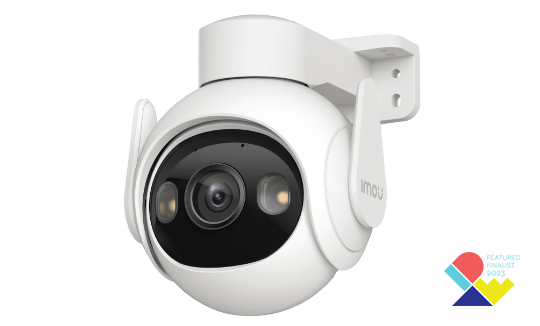
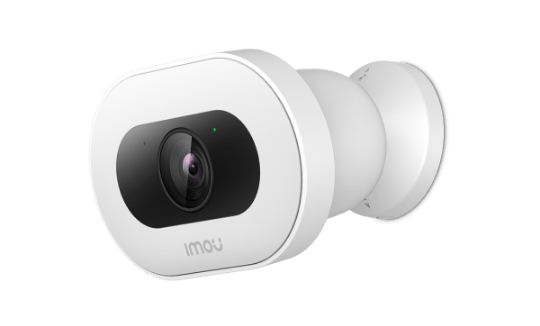
IMOU OUTDOOR CAMERA
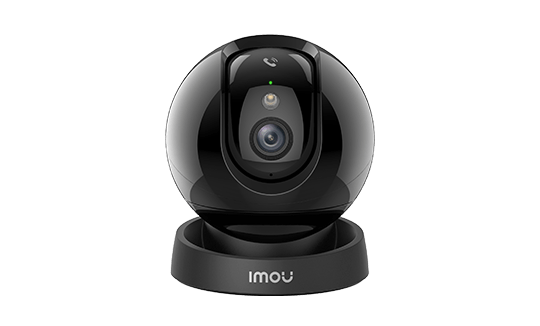
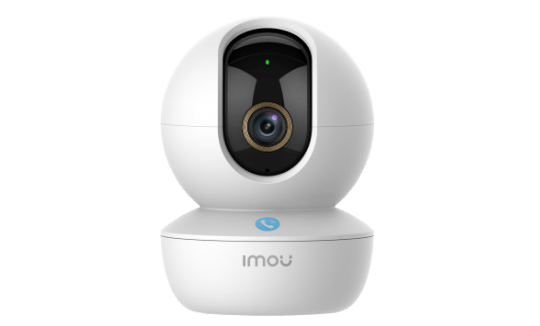
IMOU INDOOR CAMERA
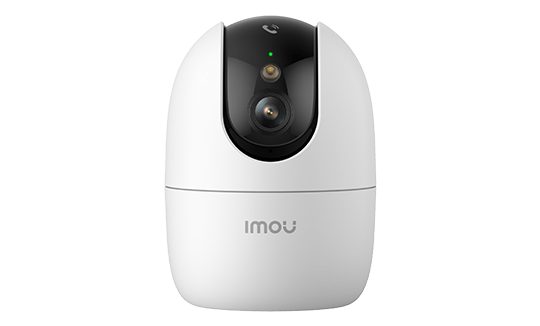
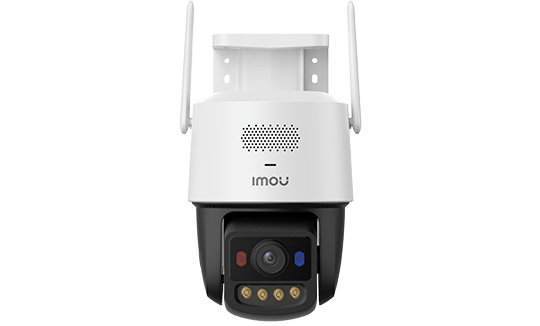
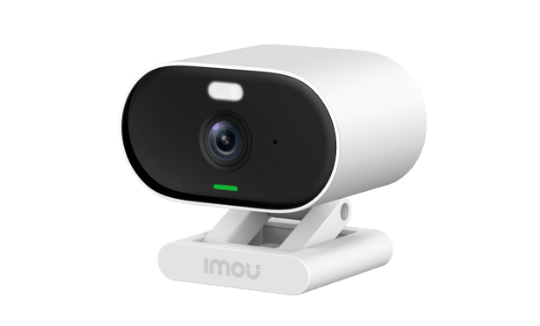
Imou 4G Cameras: Monitor Sites Where There Is No Fixed Network
Wi-Fi and Ethernet have their limits: both assume network infrastructure is already nearby. An active construction site, a stretch of agricultural land, a holiday cottage without a broadband router, a vineyard, a private wood or an isolated car park may not offer that infrastructure. 4G LTE is the answer.
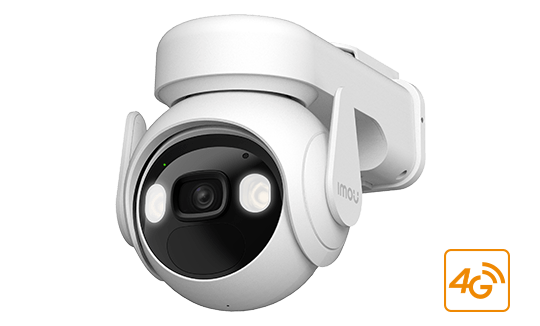
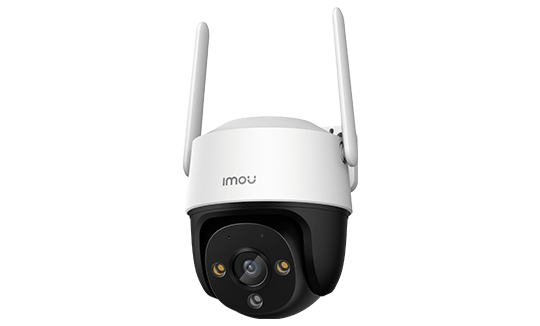
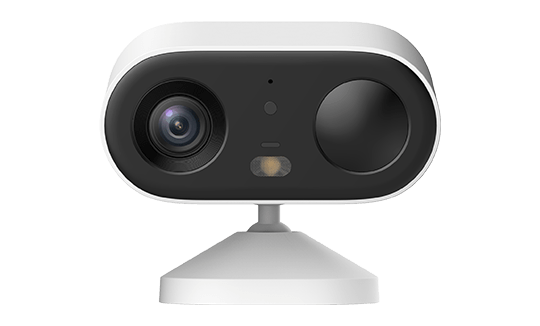
Imou 4G cameras integrate an LTE Cat.4 modem and a nano-SIM card slot. They connect to the mobile network without any intermediate equipment. Battery-powered models operate for weeks without mains supply, or indefinitely with a solar panel.
This page covers the 5 Imou 4G camera models, with guidance on choosing a SIM plan, estimating data consumption and getting the installation right on site.
Imou 4G Cameras: Model Overview
Cruiser 4G — Motorised PTZ on Battery or Mains
The Cruiser 4G is a motorised PTZ camera. Its horizontal pan covers 355° and vertical tilt 90°, allowing a full sweep of any area without blind spots. The 4× optical zoom enables close-in detail without the image quality loss associated with digital zoom.
Resolution is 2 MP (1080p Full HD). The sensor produces a clean image in low light thanks to integrated IR illuminators. IP66-rated for dust and jet-water resistance.
It connects via 4G LTE Cat.4 with a nano-SIM card. Power is flexible: a 5,000 mAh internal battery for untethered use, or mains power for a permanent fixed installation. On battery in detection mode, expect anywhere from several days to a few weeks depending on site activity.
- Resolution: 2 MP (1080p)
- PTZ: 355° horizontal / 90° vertical
- Zoom: 4× optical
- Battery: 5,000 mAh (or mains)
- Connectivity: 4G LTE Cat.4, nano-SIM
- IP rating: IP66
Cell PT 4G — Solar-Autonomous PTZ with AI Detection
The Cell PT 4G is designed for remote sites with no electrical supply. Its integrated solar panel continuously recharges the 15,000 mAh battery. With average daily sunlight of 4–6 hours (standard European conditions), the system sustains its charge without any external power input.
Resolution is 3 MP, higher than the Cruiser 4G. It incorporates AI detection algorithms that distinguish people and vehicles from other movement sources — branches, wildlife, shadows. This precision matters on isolated land where false alerts waste battery and flood notifications.
The SD card slot accepts up to 256 GB, enabling local storage of recordings with no cloud subscription required.
- Resolution: 3 MP
- PTZ: 355° / 90°
- Battery: 15,000 mAh + integrated solar panel
- Connectivity: 4G LTE
- SD card: up to 256 GB
- AI detection: people and vehicles
- IP rating: IP66
DK7 — 360° PTZ with Auto-Tracking and 110 dB Siren
The DK7 pushes active deterrence further. Its PTZ rotation covers a full 360° horizontally with no dead angle, and it features automatic target tracking. When a person enters the frame, the camera follows them throughout its rotation range.
It includes an integrated microphone and speaker for two-way communication via the app. In alarm mode, the built-in siren reaches 110 dB — enough to deter an intruder and alert nearby occupants or neighbours.
Full-colour night vision works up to 10 metres using an integrated white spotlight that activates on detection. Resolution is 3 MP.
- Resolution: 3 MP
- PTZ: 360° horizontal / auto-tracking
- Battery: integrated (rechargeable)
- Connectivity: 4G LTE
- Audio: two-way microphone + speaker
- Siren: 110 dB
- Colour night vision: 10 m (white spotlight)
- IP rating: IP66
Titan Pro — Fixed 4 MP with Dual 4G + Wi-Fi Connectivity
The Titan Pro is a fixed (non-PTZ) camera built for permanent locations where dual connectivity is an advantage. It supports both 4G LTE and Wi-Fi simultaneously with automatic failover. When Wi-Fi is available — at a main residence, for instance — the camera uses it to save mobile data. If Wi-Fi drops, it switches to 4G without interruption.
Resolution is 4 MP (2,560 × 1,440). The 60-metre infrared range positions it for access monitoring, driveway surveillance and perimeter coverage. IP67 rating — one step above IP66 — means it can withstand brief submersion.
- Resolution: 4 MP (2560×1440)
- Connectivity: 4G LTE + Wi-Fi dual-mode
- IR range: 60 metres
- SD card: up to 256 GB
- IP rating: IP67
- Automatic 4G/Wi-Fi failover
DK3 — Fixed 2 MP with White Flash
The DK3 is the entry-level 4G camera. Its 2 MP (1080p) resolution suits access points or thoroughfares where precise identification is not the primary requirement. It incorporates a white flash that fires on detection: the burst of colour illumination creates a surprise deterrent effect and produces a clear image even in complete darkness.
It runs on a rechargeable battery and is aimed at sites without electricity or fixed network. Installation is quick: wall mount, insert the SIM, charge the battery and configure via the Imou app.
- Resolution: 2 MP (1080p)
- Connectivity: 4G LTE
- Battery: rechargeable
- Flash: white light triggered on detection
- IP rating: IP66
Comparison Table: All 5 Imou 4G Models
| Model | Resolution | PTZ | Battery | Solar | AI Detection | Audio | IP Rating |
|---|---|---|---|---|---|---|---|
| DK3 | 2 MP | No | Rechargeable | No | No | No | IP66 |
| Cruiser 4G | 2 MP | 355°/90°, 4× zoom | 5000 mAh or mains | No | No | No | IP66 |
| Cell PT 4G | 3 MP | 355°/90° | 15,000 mAh | Yes (integrated) | Yes | No | IP66 |
| DK7 | 3 MP | 360° + auto-track | Integrated | No | No | Yes (110 dB) | IP66 |
| Titan Pro | 4 MP | No (fixed) | Rechargeable | No | No | No | IP67 |
Typical Use Cases for Imou 4G Cameras
Construction Sites
A building site changes shape every week. Access routes shift, sensitive zones evolve. A battery-powered 4G camera can be repositioned in minutes, with no cable run and no electrician needed. The DK7 with its auto-tracking and 110 dB siren is particularly well suited to sites where theft of materials is a recurring risk.
Farmland and Agricultural Properties
Farms and smallholdings spread over areas where cable runs would be prohibitively expensive. The Cell PT 4G with its integrated solar panel operates at full autonomy in a field or at the end of a row of crops. AI detection filters wildlife and only alerts on human intrusions and vehicles.
Remote Holiday Properties
A holiday home may stand empty for several months at a time. Without an active broadband subscription, Wi-Fi does not function. The Titan Pro with its dual 4G + Wi-Fi connectivity adapts: it uses the home broadband when you are on site and switches to 4G when monitoring from a distance. The Cruiser 4G on mains covers the main entrance with a motorised PTZ view.
Car Parks and Industrial Zones
An outdoor car park on the edge of an industrial estate is not always cabled. The Titan Pro in fixed 4 MP mode covers an access point or driveway with a 60-metre IR range. For a larger area, the Cruiser 4G with 4× optical zoom can read a number plate at distance.
Private Woodland and Natural Areas
Monitoring woodland to deter illegal felling, spot fires early or combat poaching is a specific need. The Cell PT 4G, energy-independent via solar, with local recording to a 256 GB SD card and AI detection, records on site without any cloud dependency.
Campsites and Motorhome Stops
On a campsite, power points are often absent away from serviced pitches. A battery-powered 4G camera can be strapped to a post or a tree with a cable tie and monitor the entrance or a pay station with no network infrastructure at all.
SIM Plan Guide for 4G Cameras
Choosing the right SIM plan is as important as choosing the camera itself. Underestimating data consumption leads to either overage charges or mid-month outages.
Estimating Your Data Usage
Data consumption depends on two main factors: operating mode (detection-only or continuous streaming) and resolution.
| Usage Mode | Estimated Monthly Consumption |
|---|---|
| Detection-only, 10–20 events/day, 20–30 s clips | 5–10 GB/month |
| Occasional live viewing (2–3 times/day) | 10–20 GB/month |
| Continuous 24/7 stream (1080p) | 30–50 GB/month |
| Continuous 24/7 stream (3–4 MP) | 50–80 GB/month |
The vast majority of Imou 4G installations run in detection mode: the camera sleeps and only sends a clip when it detects an event. In this mode, 10 GB/month is generally sufficient for a site with moderate activity — a closed construction site at night or a holiday home.
Recommended SIM Plans
M2M (Machine-to-Machine) plans are specifically designed for connected devices and are often cheaper than consumer plans for the same data allowance. In the UK and most of Europe, options include:
- Dedicated IoT/M2M plans from major mobile operators: typically starting at €2–5/month for 1–5 GB. Useful for agricultural and rural coverage where operator networks vary in quality.
- Standard consumer SIM plans with data: a basic plan with 20 GB of data at around €8–10/month is well suited to detection-only use with one or two cameras.
- Multi-SIM business plans: if you are running several 4G cameras on a single site or across multiple locations, a business IoT account with centralised SIM management and pooled data is more cost-effective.
For domestic or agricultural use with 1–2 cameras, a standard consumer plan with 20 GB of data is usually the simplest approach. For a fleet of cameras on a construction site or farm, a business M2M plan with centralised SIM management will be more economical.
SIM Compatibility
All Imou 4G cameras use a nano-SIM (4FF format). Confirm that your operator supplies the correct format, or request a multi-format punch-out SIM. The SIM must be activated with a data plan before being inserted in the camera. Imou does not supply SIM cards or data plans.
Installation and SIM Configuration
Setting up an Imou 4G camera takes just a few steps.
Step 1: Charge the Battery
For battery models (DK3, DK7, Cell PT 4G), fully charge the battery before first use. The Cell PT 4G can charge via its solar panel if there is sufficient sunlight; otherwise, use the USB-C cable.
Step 2: Insert the SIM
The nano-SIM slot is typically located behind a weatherproof cover. Remove the cover, insert the SIM in the correct orientation (check the engraved diagram in the slot), then refit the cover firmly. An improperly closed cover compromises the IP66/IP67 seal.
Step 3: Configure via the Imou App
Download the Imou app (iOS or Android). Create an account if you do not already have one. Start the device-add process, scan the camera’s QR code (on the label or in the settings) and follow the instructions. The camera attempts to connect to the 4G network using the operator’s APN settings.
If the connection fails, manually enter your operator’s APN in the camera’s network settings via the app. Each operator uses a specific APN — check your operator’s support documentation for the correct value.
Step 4: Position the Camera
For solar-panel models (Cell PT 4G), orient the panel south-facing with a 30–45° tilt depending on your latitude. In central Europe and the UK, a 40° angle is a good year-round compromise between summer and winter sun angles.
Check the 4G signal level from the camera’s interface before making the final mount. A signal of -85 dBm or better (RSRP) is satisfactory. Below -100 dBm, consider an external 4G antenna if the model supports one.
Battery Life: Factors and Tips
The battery life of a 4G camera on battery varies considerably depending on operating conditions. Here are the main factors.
Detection Frequency
Every detected event wakes the camera, activates the 4G modem, encodes the video and sends the clip or notification. This cycle consumes far more energy than idle sleep. A site with 50 detections per day depletes the battery much faster than a site with 5. On quiet farmland, battery life can exceed 4 weeks. On a busy daytime construction site, expect only a few days.
Temperature
Li-ion batteries lose capacity below 0°C. At -10°C, a 5,000 mAh battery behaves like a 3,000–3,500 mAh unit. Plan for more frequent recharging in winter, or opt for a solar-equipped model which partially offsets this loss.
Network Signal
A weak 4G signal forces the modem to increase its transmit power to maintain the connection. In a marginal coverage area, modem consumption can double. Prioritise installation in areas with good 4G signal.
Solar Panel: Optimising Recharge
The Cell PT 4G’s integrated solar panel produces approximately 10–15 Wh per day under optimal conditions (4 hours of direct sunlight). If the camera’s daily consumption is below this figure (detection-only mode with low activity), the battery sustains itself indefinitely. If consumption exceeds solar production (continuous streaming, many detections), the battery gradually discharges. Compatible external solar panels (10 W, 20 W) can increase production if needed.
4G vs Wi-Fi vs PoE Comparison
| Criterion | 4G LTE | Wi-Fi | PoE (wired) |
|---|---|---|---|
| Required infrastructure | Mobile coverage (SIM) | Broadband router + Wi-Fi access point | RJ45 cabling + switch/NVR |
| Range | Unlimited (operator coverage) | 20–50 m depending on obstacles | 100 m per segment |
| Stability | Good (in covered areas) | Variable | Very high |
| Monthly cost | €5–20 per SIM | Included in broadband subscription | None |
| Battery operation | Yes (battery models) | Yes (some models) | No (always mains-powered) |
| Installation | Very simple, cable-free | Simple | Cabling required |
| Ideal use case | Remote sites, mobile, construction | Home, small business | Permanent professional installation |
4G does not replace PoE for fixed installations where network infrastructure is available. An Ethernet cable provides superior reliability and bandwidth. But for any site where cabling is not feasible, 4G is the only fully autonomous solution. The two technologies complement each other well on large properties: PoE for fixed positions close to the main building, 4G for remote positions further afield.
Key Takeaways
- Imou 4G cameras work with any standard nano-SIM — choose a 1–5 GB/month data plan depending on usage frequency.
- The Cell PT 4G combines 4G, rechargeable battery and built-in solar panel — the most autonomous solution for off-grid sites.
- The Cruiser 4G is the only motorized PTZ 4G Imou model on mains power — ideal for semi-permanent installations.
- Data consumption in detection-only mode (no live viewing) is approximately 500 MB to 1 GB per month on recent models.
- The DK3 and DK7 are the most affordable 4G entry-level options — perfect for starting with 4G surveillance without major investment.
Frequently Asked Questions
Which SIM card to use with an Imou 4G camera in the UK/EU?
Any standard 4G LTE nano-SIM works. For rural coverage, choose a major network operator. A data-only SIM (5–20 GB/month) is ideal — no voice plan needed. In the EU, roaming regulations mean a French or German SIM used in other EU countries consumes your home plan’s data without extra charges (check fair use policy for extended stays).
How much data does an Imou 4G camera use?
In event-only detection mode (no constant live viewing): approximately 1–3 GB/month depending on event frequency. Live HD viewing consumes roughly 200–500 MB per hour. For high-activity sites, a 10 GB/month plan provides comfortable headroom.
What minimum 4G signal strength is needed for Imou cameras?
A minimum 4G signal of -100 dBm (1–2 bars) is enough for alerts and event clips. For smooth live HD viewing, a signal of at least 3 bars is recommended. In weak coverage areas, set the camera to reduced video quality in Imou Life to stabilize the connection.
Can Imou 4G cameras be used across Europe?
Yes. Imou 4G cameras support standard European LTE bands (B1, B3, B7, B8, B20). Within the EU, roaming rules allow a home SIM to be used in other member states using your existing data allowance. Check your operator’s fair use terms for extended roaming stays.